
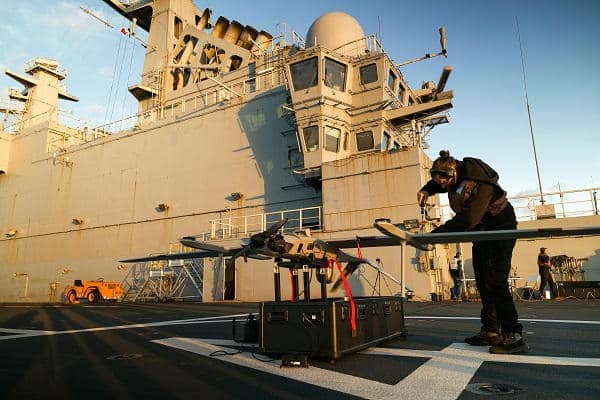


The French Navy has been evaluating the AR3 EVO drone developed by Tekever aboard the Dixmude helicopter carrier. This assessment is part of a broader initiative to enhance aerial reconnaissance capabilities within naval operations.
Overview of the AR3 EVO Drone
The AR3 EVO is a state-of-the-art unmanned aerial vehicle (UAV) designed for various military applications. Its features include:
- Flight Speed: Capable of reaching speeds up to 220 km/h.
- Altitude: Operates at altitudes of up to 5,500 meters.
- Versatility: Designed for reconnaissance, surveillance, and intelligence-gathering missions.
Integration with the Dixmude Carrier
The integration of the AR3 EVO drone aboard the Dixmude enhances the carrier’s operational capabilities. This helicopter carrier is one of three Mistral-class amphibious assault ships in the French Navy, equipped to support a variety of missions, including:
- Humanitarian assistance
- Combat operations
- Maritime security
Technical Specifications and Performance Metrics
When evaluating the AR3 EVO, the French Navy focuses on several key performance metrics:
- Endurance: The drone’s ability to sustain long missions without refueling.
- Payload Capacity: Ability to carry advanced sensors and surveillance equipment.
- Data Transmission: High-speed data link capabilities for real-time intelligence sharing.
Strategic Implications for Naval Operations
The deployment of advanced UAVs like the AR3 EVO represents a significant shift in naval strategy, allowing for:
- Enhanced situational awareness
- Reduced risk to personnel during reconnaissance missions
- Improved decision-making through timely intelligence
Conclusion
The ongoing evaluation of the AR3 EVO drone by the French Navy aboard the Dixmude carrier underscores the importance of integrating advanced technology into modern naval operations. As the military landscape evolves, the capabilities offered by UAVs will play a crucial role in maintaining operational superiority.