
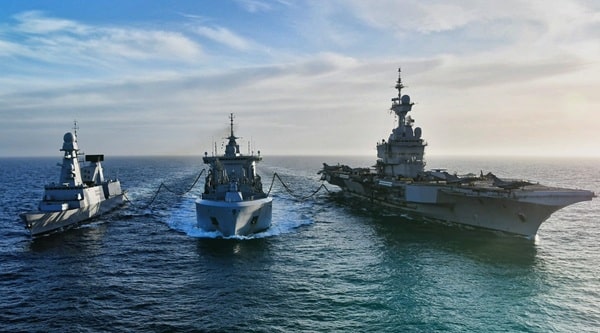


At the end of 2019, following several incidents involving the Iranian Revolutionary Guard Corps in the Strait of Hormuz—crucial for oil and gas supply—France initiated Operation EMASOH (European-Led Mission Awareness Strait of Hormuz), also known as “Agenor,” to protect maritime traffic in the region. This operation is significant for maintaining stability in a vital shipping corridor.
Navy Strength: 8 Frigates and 2 Helicopter Carriers Deployed
The deployment of eight frigates and two helicopter carriers underscores the commitment to maritime security and the protection of international shipping lanes. These naval assets play a critical role in ensuring safe passage through the Strait of Hormuz, which is a strategic chokepoint for global oil transport.
Operational Capabilities of Deployed Naval Assets
- Frigates: Equipped with advanced radar and missile systems, these vessels are designed for anti-air, anti-surface, and anti-submarine warfare.
- Helicopter Carriers: Capable of deploying helicopters for reconnaissance and search-and-rescue operations, enhancing operational flexibility.
Strategic Importance of the Strait of Hormuz
The Strait of Hormuz is a narrow passage that connects the Persian Gulf with the Arabian Sea. Approximately 20% of the world’s oil supply transits through this vital waterway, making its security paramount for global energy markets.
Impact of the Deployment on Regional Stability
The presence of these naval forces not only deters potential threats but also reassures allied nations of the commitment to maintaining freedom of navigation. This deployment reflects a broader strategy to enhance maritime security in response to regional tensions.
Conclusion
In conclusion, the deployment of eight frigates and two helicopter carriers is a significant step in reinforcing naval strength in the region. It highlights the importance of international cooperation in safeguarding vital maritime routes and ensuring stability in a critical area for global trade.